
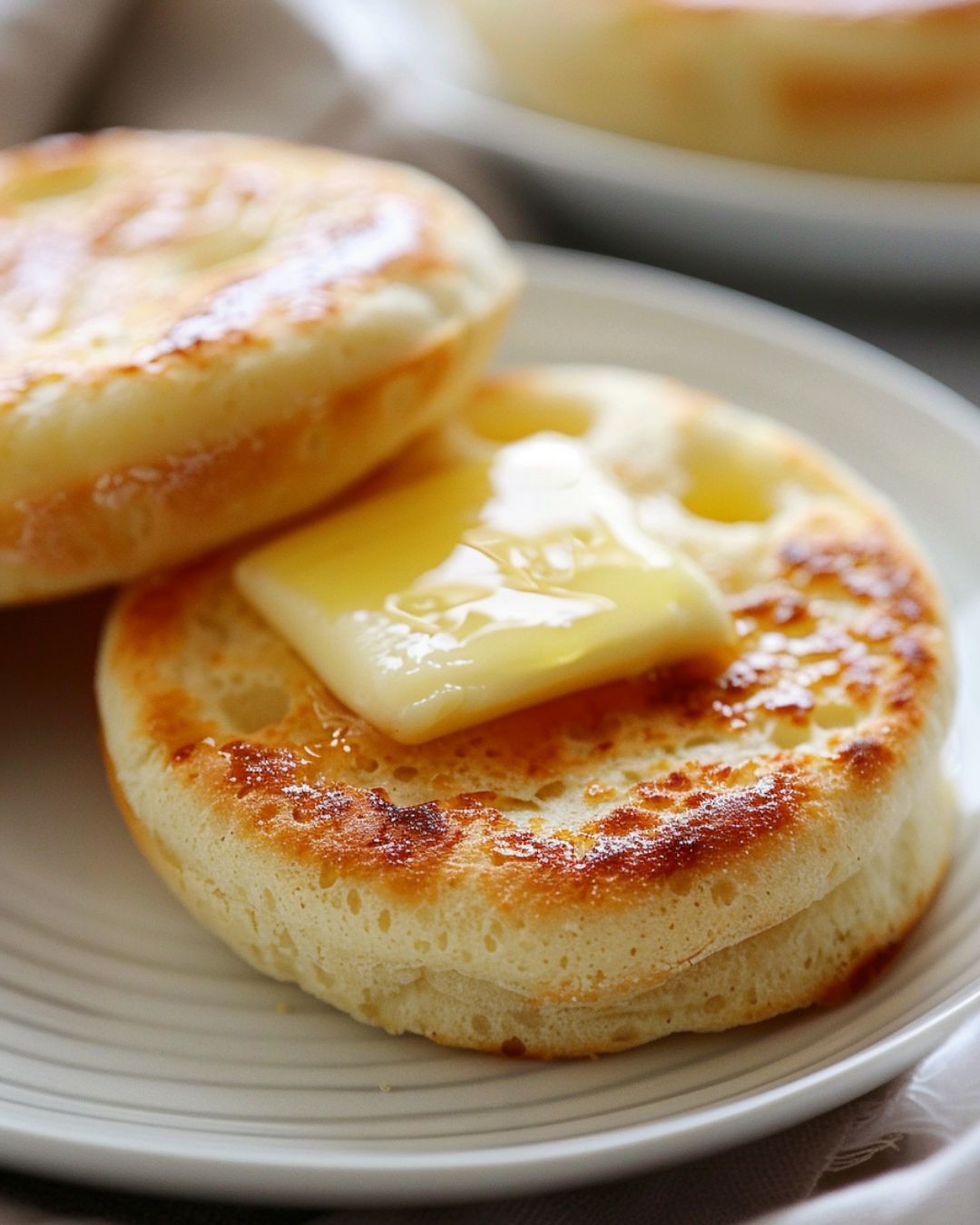
Soft on the inside, golden and crisp on the outside—these easy English breakfast muffins are perfect for toasting, topping, and savoring.
There’s nothing quite like a warm, homemade English muffin fresh off the griddle.
Unlike their store-bought cousins, these muffins are pillowy, rich with flavor, and packed with the signature nooks and crannies that soak up every bit of melted butter or jam.
They’re surprisingly simple to make at home, and the results are so rewarding you’ll wonder why you haven’t tried it sooner.
They rise beautifully, cook to golden perfection, and split open with that classic texture we all love.
Perfect for breakfast sandwiches, eggs Benedict, or a simple spread of honey, these muffins are versatile and always satisfying.
The dough is light and easy to handle, and there’s no need for an oven—just a hot skillet or griddle and a bit of patience.
Whether you eat them straight away or toast them the next day, they’ll quickly become a breakfast staple in your kitchen.
Once you’ve tasted these made-from-scratch beauties, you’ll never want to go back to the packaged version.
Make a batch on the weekend, and you’ll have breakfasts ready to go all week long.
Crispy, soft, and full of flavor, they’re a classic for a reason—and now you can make them anytime you like.
Easy English Breakfast Muffins Ingredients
These muffins require only a handful of pantry basics, but each ingredient is key to creating that classic taste and texture.
All-purpose flour: This provides structure and elasticity to the dough while keeping the muffins light and soft inside.
Warm milk: Warmed just slightly, milk activates the yeast and helps create a tender, moist crumb.
Active dry yeast: This is what gives the muffins their signature rise and airy texture. It needs a warm liquid and a little sugar to get started.
Sugar: A small amount of sugar feeds the yeast and gives a subtle sweetness to the dough.
Salt: Enhances flavor and helps control the rise of the dough for a more even texture.
Butter: Adds richness and softness to the muffins while also giving a hint of buttery flavor.
Cornmeal or semolina: Used for dusting the cooking surface, this gives the muffins their traditional bottom crust and a bit of added texture.
Optional egg: Some recipes use an egg for extra richness and structure, though it’s not essential for a great result.
Best Tips for Making Easy English Breakfast Muffins
Making these muffins at home is easy once you know a few pro tricks to get that golden, fluffy finish.
Use warm—not hot—milk: Milk that’s too hot will kill the yeast. Aim for just warm to the touch, around 100–110°F.
Proof the yeast: Let the yeast sit in the warm milk with a bit of sugar for about 5 minutes until it gets foamy—this tells you it’s alive and ready.
Don’t rush the rise: Give the dough plenty of time to rise until doubled. A warm kitchen helps, but patience is key.
Roll the dough evenly: Keep the thickness around ¾ inch to ensure the muffins cook evenly and don’t come out too flat or tall.
Use a biscuit cutter: This gives clean edges and helps the muffins rise straight up instead of spreading out.
Dust with cornmeal or semolina: This keeps the dough from sticking to the pan and adds that iconic muffin texture on the bottom.
Cook low and slow: Use a skillet or griddle on medium-low heat. English muffins need time to cook through without burning the outsides.
Flip often if needed: You may need to flip the muffins a couple of times to make sure both sides are evenly golden and cooked inside.
How to Store Easy English Breakfast Muffins
Fresh muffins are always best, but they store really well so you can make a batch ahead of time.
Cool completely before storing: Let them cool fully to avoid trapping moisture, which makes them soggy.
Store at room temperature: Place in an airtight container or bag for up to 4 days. Toast before serving for best flavor and texture.
Refrigerate to extend freshness: Store in the fridge if your kitchen is warm, and they’ll last up to a week.
Freeze for long-term storage: Wrap each muffin individually or layer with parchment in a freezer bag. They’ll keep for up to 2 months.
Reheat from frozen: Just pop them into the toaster or a warm oven for a few minutes to revive the crispy edges.
Split before storing if preferred: If you like easy toasting, split the muffins before storing so they’re ready to go straight into the toaster.
Tasty Easy English Breakfast Muffins Variations
Classic English muffins are great on their own, but you can definitely have fun with flavors.
Whole wheat muffins: Substitute half the flour with whole wheat for added fiber and a slightly nuttier flavor.
Cheddar and chive muffins: Add shredded cheese and finely chopped chives to the dough for a savory version perfect with eggs.
Sweet cinnamon raisin muffins: Mix in a handful of raisins and a teaspoon of cinnamon to create a gently sweet and warm morning muffin.
Everything bagel-style muffins: Before cooking, press the tops into a mix of sesame seeds, garlic, and onion flakes for a bold, savory twist.
Sourdough English muffins: Use a sourdough starter instead of yeast for a more complex flavor and chewy texture.
Vegan muffins: Use plant-based milk and butter substitutes, and skip the optional egg—still soft and fluffy with the right rise.
Pumpkin spice muffins: Stir in a spoonful of pumpkin puree and warm spices for a cozy fall breakfast option.

Easy English Breakfast Muffins
Ingredients
- 2 ¼ teaspoons 1 packet active dry yeast
- 1 tablespoon sugar
- 1 ¼ cups warm milk about 100–110°F
- 3 cups all-purpose flour
- 1 teaspoon salt
- 2 tablespoons unsalted butter softened
- Cornmeal or semolina for dusting
- Optional: 1 egg for richer dough
Instructions
- Proof the yeast: In a bowl, mix warm milk, sugar, and yeast. Let it sit for 5–10 minutes until it becomes foamy.
- Make the dough: In a large mixing bowl, combine flour and salt. Add in the yeast mixture and softened butter (and egg, if using). Stir until a dough forms.
- Knead the dough: Transfer to a floured surface and knead for about 5–7 minutes until smooth and elastic.
- Let it rise: Place the dough in a greased bowl, cover, and let rise in a warm spot for 1 hour or until doubled in size.
- Shape the muffins: Roll the dough out to about ¾ inch thick. Use a biscuit cutter or glass to cut out circles. Reroll scraps as needed.
- Dust and rest: Sprinkle a baking sheet with cornmeal or semolina and place the muffins on top. Dust the tops lightly and cover with a towel. Let rest for 20 minutes.
- Cook the muffins: Heat a skillet or griddle over medium-low heat. Cook muffins 6–7 minutes per side until golden brown and cooked through. Flip carefully.
- Cool and enjoy: Let the muffins cool slightly before splitting with a fork and toasting. Serve with butter, jam, or eggs.